The Silver Lake Median Everyone Quotes Is Measuring Four Different Neighborhoods at Once
September 24, 2026
September 24, 2026
Search "Silver Lake median home price" this month and you'll get three answers that don't agree with each other. Zillow's home value index puts the number at $1,463,439, essentially flat over the past year. Redfin's three-month window through August 2026 shows a median sale price of $1.6 million, down 4 percent from the same period last year. Movoto's spring snapshot landed at $1,525,000. None of these sources made an error. They're each measuring something real. The problem is that "Silver Lake" isn't one housing market, and no single number can describe a neighborhood that's actually three or four of them stacked on a hillside around a reservoir.
If you're comparing Silver Lake against Echo Park or Los Feliz right now, that distinction matters more than any of the headline figures. Here's what's actually driving the spread, and how to read a Silver Lake listing once you know it.
Start with why the portals disagree before you get to why the neighborhood is complicated. Zillow's figure is an index built from estimated property values across every home in the boundary, not a median of what actually closed. Redfin and Movoto report on closed sales, but over different windows and with different neighborhood boundary definitions feeding the calculation. A sold-price median can slide while an estimated-value index holds flat, especially when the mix of what sold that quarter shifts toward one price band or another.
That's the first layer. The second layer, and the one that actually changes how you should shop, is that Silver Lake's housing stock isn't uniform enough for a single median to mean much even when the math is done correctly.
Silver Lake wraps around its namesake reservoir, and the terrain does most of the work of sorting the market into tiers.
The reservoir-adjacent streets, the ones within walking distance of the Silver Lake Reservoir Complex and its 2.2-mile loop path around the water, trade on view and proximity to that open space. Supply here is thin, buyer tolerance for friction is low, and homes in this tier move fast because there simply aren't many of them.
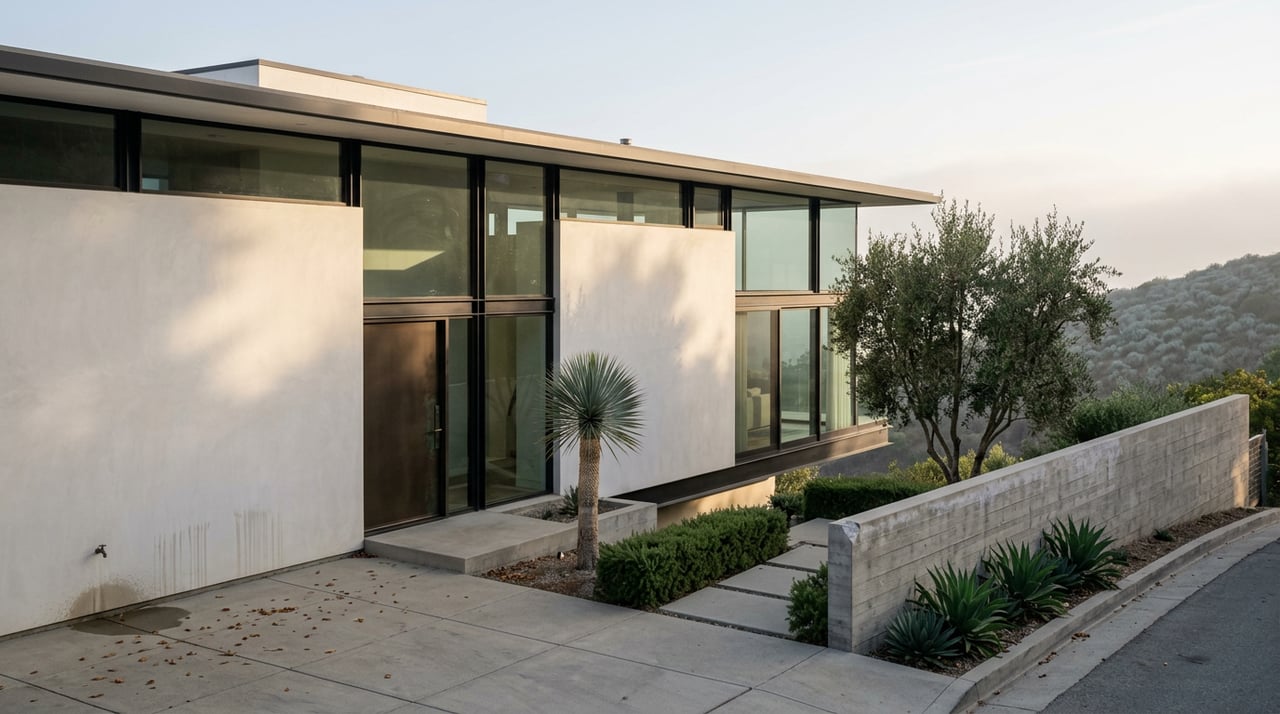
Climb higher and you're in hillside territory, where narrow, winding streets follow the contour of the land rather than a flat grid. This is where Silver Lake's architectural reputation actually lives. The hills carry a real concentration of work from Richard Neutra, Rudolf Schindler, John Lautner, and Gregory Ain, and pockets like the area known locally as Moreno Highlands remain some of the most sought-after addresses in the neighborhood. But hillside also means stair access on many parcels instead of a driveway, steeper lots, and a meaningfully smaller pool of buyers willing to take that on. A renovated stair-access home can sit longer than a dated flat-access home a few blocks away, not because it's worth less, but because fewer buyers are shopping for that specific tradeoff.
Then there's the flats, generally the ground around Sunset Junction where Sunset Boulevard meets Santa Monica Boulevard. This is walkable, commercial-corridor Silver Lake, home to the twice-weekly farmers market and most of the neighborhood's shops and restaurants. Flats properties trade on architectural condition and ADU status more than on view, and they generally sit outside the highest wildfire-hazard designations that apply to the hills above them.
Three tiers, three buyer profiles, three different comp sets. Blend them into one median and you get a number that describes an average buyer who doesn't exist.
There's a fourth complication, and it's the one most explanations of Silver Lake pricing leave out entirely. Los Angeles has allowed small-lot subdivisions since 2005, a zoning tool that lets a developer split a single urban parcel into several smaller fee-simple lots, each holding its own detached house. Corridors like Rowena Avenue and Hyperion Avenue have seen a steady trickle of this product over the past decade: new three-story detached homes on lots a fraction of the size of the parcel next door, often priced close to older inventory on a per-square-foot basis.
These are legally single-family homes and they finance the same way a traditional detached house does. But an appraiser pulling comps still has to account for the differences in lot size, outdoor space, and construction era, because folding a 2020s small-lot build and a 1926 bungalow with a real yard into the same price-per-square-foot average distorts what either one is actually worth. If you've walked two open houses on the same Saturday in this neighborhood and come away confused about why they're priced almost identically despite feeling nothing alike, this is usually why.
If you're far enough along to be evaluating a specific hillside property, the sub-market you're in changes what you should be asking for before you write an offer.
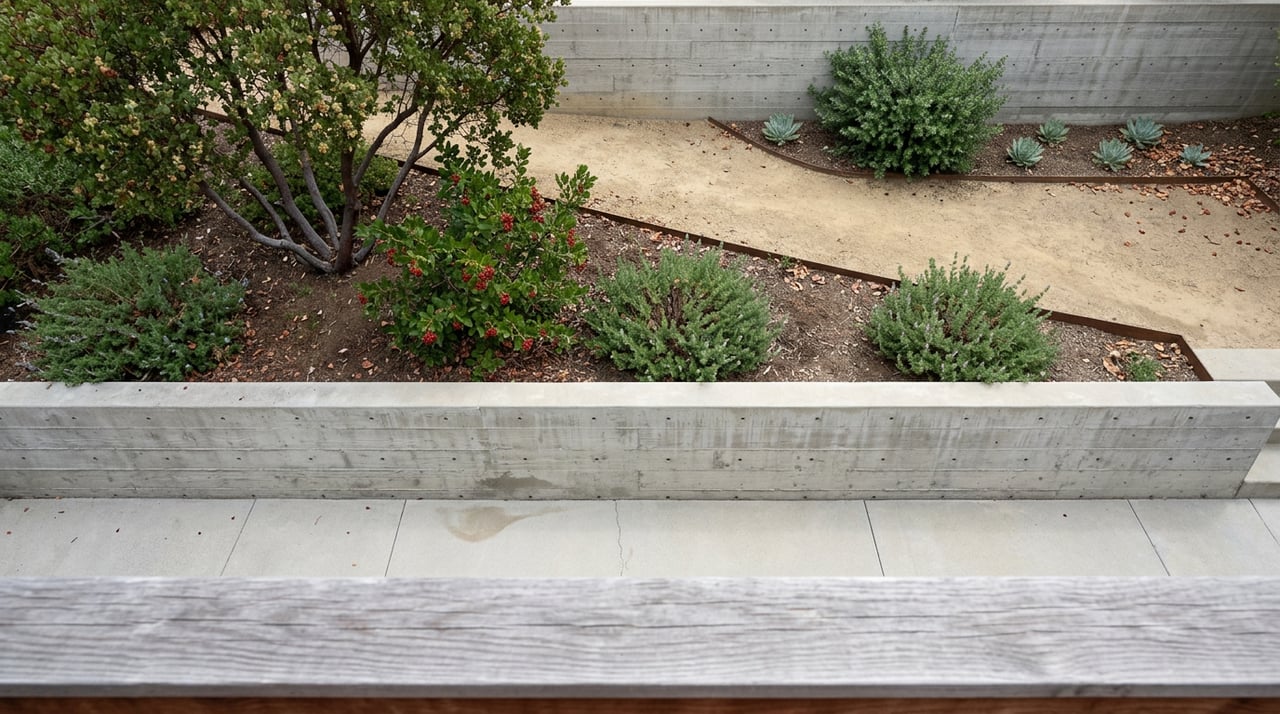
On flat-grid streets, condition and permit history matter but rarely become the whole conversation. On hillside parcels, they often are the conversation. Los Angeles applies a Hillside Construction Regulation overlay in designated areas that adds extra review for additions, retaining walls above a certain height, and grading work. Lenders get cautious about slope. Buyers in this market tend to be analytical, and in 2026 they're increasingly asking for a documented permit history through the Los Angeles Department of Building and Safety, engineered sign-off on any retaining wall, and a recent soils or geotechnical report on any parcel with visible grade or past drainage work.
A clean file on those items doesn't just avoid a headache. It answers the buyer's underwriting question before their inspector raises it, and in a market where a documented wall issue commonly translates into a five-figure credit request, that's a real number, not a formality. The California Natural Hazard Disclosure Statement will also flag whether a property sits inside a high or very high fire hazard severity zone, a designation that applies to a meaningful share of the hillside parcels above the reservoir but generally not to the flats near Sunset Junction. That single disclosure box is one more reason the neighborhood can't be shopped, priced, or sold as one market.
If Silver Lake is on your list alongside Echo Park or Los Feliz, the median comparison you've probably already run isn't wrong, it's just not specific enough to act on. Echo Park's median sale price has run roughly $370,000 below Silver Lake's in recent reporting, and that gap is real. But it's a gap between two neighborhood-wide averages, each hiding its own internal spread between hillside and flats product.
The more useful question isn't "what does Silver Lake cost." It's "which of these three or four Silver Lakes am I actually comparing to Echo Park or Los Feliz." A reservoir-adjacent property competing against Los Feliz's hillside inventory is a fair comparison. A Sunset Junction flats condo competing against that same Los Feliz hillside listing is not, no matter what the neighborhood-wide medians say.
Why do Zillow, Redfin, and Movoto show different Silver Lake prices in the same month? They're measuring different things. Zillow's figure is an estimated-value index across all homes in the boundary. Redfin and Movoto report medians from actual closed sales over different reporting windows, and neighborhood boundary definitions vary slightly between the two.
Is a hillside home in Silver Lake a good investment compared to a flats property? Both can perform well, but they behave differently. Reservoir-adjacent and flats properties generally see faster turnover with a broader buyer pool, while hillside homes carry more upside for buyers seeking architectural character and view, balanced against a narrower pool of buyers and more due diligence around access and slope.
What should I ask a seller's agent before making an offer on a Silver Lake hillside property? Ask for the permit history on any additions, decks, or retaining walls, and ask whether a recent soils or geotechnical report exists for the parcel. On flat-grid properties this is rarely necessary, but on hillside terrain it's become a standard and reasonable request.
Comparing Silver Lake against a few other Eastside neighborhoods, or trying to figure out which of its sub-markets actually fits a specific budget and a specific block? The LA Home Girl Team works this terrain street by street, not zip code by zip code, and can walk you through which comps actually apply to the home in front of you. Help Me Sell.
Stay up to date on the latest real estate trends.


Experience the advantage of working with a collaborative team that prioritizes strategy, service, and exceptional outcomes.