Buying in Hollywood Hills: Access Tips Before You Offer
April 16, 2026
April 16, 2026
Buying in the Hollywood Hills can feel like a dream until you start thinking about the road that gets you home. A great view, striking architecture, and a private setting all matter, but in the hills, access is part of the property. If you are considering a home here, it helps to understand how street width, parking, gates, stairs, and emergency access can shape daily life before you write an offer. Let’s dive in.
In hillside areas, access is not just about convenience. The City of Los Angeles treats hillside roads differently because they are often narrow and winding, with different width and parking standards than flatter neighborhoods. According to the city's Complete Streets Design Guide, hillside street types can range from wider collectors to standard and limited streets with a 20-foot minimum roadway and parking on one side only.
That matters because the way a street is classified can affect how easy it is to live with day to day. Parking, deliveries, guest access, and even turning around can feel very different on a hillside street than on a typical city block. In practical terms, a beautiful house can function very differently depending on what the approach looks like.
Los Angeles also defines a substandard hillside limited street as one that is less than 36 feet wide, or paved to less than 28 feet of roadway width. If you are house hunting in the Hollywood Hills, this is one of the first clues that access deserves real attention during your due diligence.
When you tour a home, try to evaluate the approach as carefully as the house itself. It is easy to focus on finishes, floor plan, and views, but the route to the property may affect your routine every single day.
Ask yourself whether two cars can comfortably pass if vehicles are parked on the street. In guidance for hillside developments, LADOT notes that roads narrower than 24 feet can create situations where cars traveling in opposite directions cannot pass at the same time when parking or other obstructions are present.
That can affect more than just your commute. It may also impact deliveries, service calls, rideshares, and the experience of guests trying to visit. If you can, visit during a busier time of day to get a more realistic picture.
Parking is a major part of access in the hills. On narrower streets, even one or two parked cars can change how easy it is to move through the block.
As you tour, look at:
Because hillside parking capacity is tied to roadway width, what looks manageable during a quiet showing may feel very different at night or on a weekend.
If the property has a gate, pay attention to how it works in real life. The Los Angeles Fire Department says gates on private streets, access roads, and fire lanes must leave 20 feet free and clear, provide adequate stacking space, and include an approved override device for powered gates. You can review those security gate access requirements directly.
For you as a buyer, the practical question is simple: does the gate help privacy without creating a bottleneck? You want to understand how visitors enter, where cars wait, and how emergency access works if the power goes out.
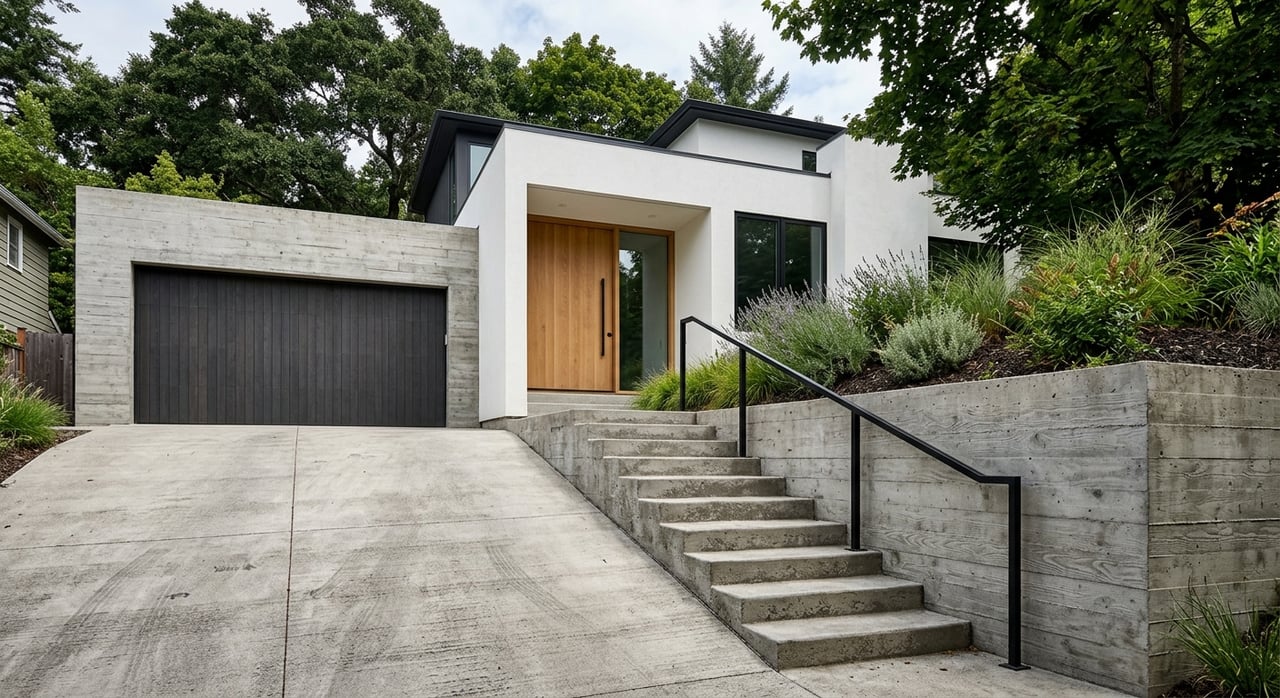
In hillside neighborhoods, the route from the curb to the front door can be a bigger deal than buyers expect. A City Planning survey notes that public stairways are a recognized feature of hillside residential development in Los Angeles, which reflects how common stair-heavy access can be in hill communities.
That does not make stairs a problem by itself. It just means you should think honestly about groceries, furniture delivery, packages, pets, and your long-term comfort with the path in and out of the home.
One of the clearest takeaways for buyers is that emergency access is treated as a physical design issue, not just a paperwork issue. The LAFD Hydrants and Access unit reviews items like street width, turn-arounds, turning radii, grade access points, parking restrictions, overhead clearances, load capacity, and secured entrances.
That tells you something important. In the Hollywood Hills, a home’s access conditions can affect more than convenience. They may also shape how the property functions in emergency situations, especially on steeper or narrower roads.
If a property sits at the end of a tight approach, behind a gate, or along a narrow street with heavy curb parking, it is worth asking more questions before you move forward. This is especially true if you know you will have regular deliveries, vendors, or visitors.
For hillside buyers, fire safety is part of the access conversation. The LAFD states that properties in the Very High Fire Hazard Severity Zone must maintain year-round brush-clearance compliance within 200 feet of structures and within 10 feet of combustible fences, roadways, or driveways used for vehicular travel.
This matters because the condition of the property is only one piece of the puzzle. The relationship between vegetation, driveway access, and the surrounding site can also affect ongoing maintenance responsibilities. If you are looking at a property with dense landscaping or a long hillside drive, this is worth reviewing early.
Some buyers plan to update, expand, or rework a Hollywood Hills property after closing. If that is your plan, access should be part of the conversation from the start.
The Hollywood Community Plan area includes a Hillside Construction Regulation Supplemental Use District overlay, and the plan page directs buyers to use ZIMAS to verify zoning and overlays. In addition, ZI-2467 states that the Hollywood Community Plan Area version of the Hillside Construction Regulation district became operative on February 11, 2025.
Why does that matter to you? Because the district adds protections tied to construction-related impacts in hillside areas, including grading limits, hauling truck operational standards, construction-hour limits, and review for larger projects. If you are buying with renovation in mind, it is smart to ask about these constraints before you commit.
LADOT also says that for new construction or larger additions on narrow hillside streets, a traffic management plan may be needed to address access, deliveries, residential circulation, and street parking. In other words, future work on your property or a neighbor’s property could affect how the street functions during construction.
A strong Hollywood Hills offer should come with strong questions. The goal is not to overcomplicate your search. It is to make sure the home fits how you actually live.
Here are smart questions to raise with your agent and escrow team:
These questions can help you move from excitement to clarity. In a hillside purchase, that is a big advantage.
Before you move forward, try this simple access check:
This kind of real-world test can tell you a lot. In the Hollywood Hills, access is not a side detail. It is part of the home’s livability, safety, and long-term usability.
In the Hollywood Hills, you should evaluate access with the same care you give views, design, and lot size. Street width, parking, gates, emergency response conditions, and future construction rules can all shape what it feels like to own the property.
When you understand those details early, you can buy with more confidence and fewer surprises. If you want a local, practical read on how a property functions beyond the listing photos, Kenya Reeves-Costa can help you ask the right questions and navigate the details with confidence.
Stay up to date on the latest real estate trends.


Experience the advantage of working with a collaborative team that prioritizes strategy, service, and exceptional outcomes.